
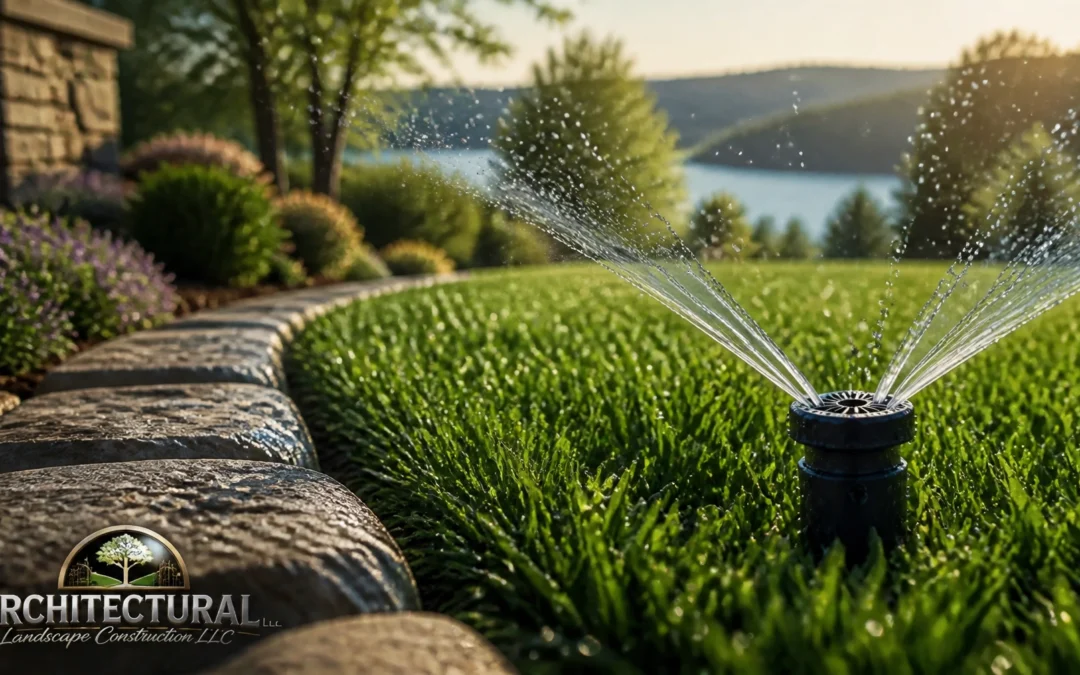
A well-designed irrigation system can keep an Arkansas landscape healthy, refined, and resilient while reducing unnecessary water use. The most successful sprinkler system installation in Arkansas accounts for hot, humid summers, slow-draining clay soil, local watering restrictions, sloped terrain, and freeze-thaw cycles. With properly divided zones, efficient sprinkler heads, drip irrigation, smart controllers, and seasonal maintenance, your landscape can receive precisely the water it needs without sacrificing beauty or long-term value.
Arkansas Conditions Demand Purposeful Irrigation Design
Arkansas landscapes experience substantial seasonal variation. Summers are often hot and humid, increasing evaporation and plant demand during extended periods of heat. Winters bring freezing temperatures and repeated freeze-thaw cycles that can damage exposed irrigation lines, backflow devices, valves, and poorly protected connections.
Across the state, USDA hardiness zones range roughly from 6a to 8b, depending on location and microclimate. A property in Northwest Arkansas may face different winter exposure and soil conditions than a landscape in Central or southern Arkansas. Irrigation design should reflect those local realities rather than rely on a generic timer and a one-size-fits-all layout.
Clay and clay-loam soils create another important consideration. They retain moisture well but absorb water slowly. If a sprinkler runs too long in one cycle, water can collect on the surface, run down a slope, or move onto driveways and walks instead of reaching the root zone.
The answer is precision: carefully planned zones, measured application rates, and programming that respects the soil.

A Complete Irrigation System Uses Multiple Delivery Methods
Professional irrigation installation is more than placing sprinkler heads around a lawn. A complete system is built around the distinct needs of turf, ornamental beds, trees, shrubs, slopes, and architectural features.
Sprinkler Zones for Turf
Rotors and efficient spray heads are commonly used for larger lawn areas. The correct head depends on the size, shape, pressure, and slope of each zone. Proper spacing creates head-to-head coverage, helping prevent dry patches without oversaturating neighboring areas.
Turf should not automatically share a zone with ornamental beds. Grass exposed to full sun may require more water than established shrubs in partial shade. Separating these areas allows the controller to apply water according to actual plant needs.
Drip Irrigation for Beds and Foundation Plantings
Drip lines and emitters deliver water slowly at the soil surface or directly near plant roots. This approach helps reduce evaporation, overspray, and runoff around planting beds, trees, and foundation landscapes.
Drip irrigation is especially valuable near stonework, walkways, walls, and outdoor living areas where unwanted spray can create staining, slippery surfaces, or premature deterioration. It also supports a more restrained and water-conscious landscape aesthetic.
Essential System Components
A professionally planned system may include:
- A dependable water connection and mainline
- Backflow prevention to protect the potable water supply
- Pressure regulation
- Zone valves and accessible valve boxes
- Rotors, spray heads, drip tubing, or bubblers
- A smart or weather-based controller
- Rain and soil-moisture sensors
- Accessible shutoff points for maintenance and winterization
Every component should be selected for performance, serviceability, and compatibility with the property’s water pressure and landscape plan.
Smart Controllers Make Watering More Responsive
Traditional clock-based timers run according to fixed schedules. They do not know whether it rained yesterday, whether temperatures have risen sharply, or whether clay soil is still holding sufficient moisture.
A smart controller adjusts the schedule according to local weather and landscape conditions. Many models can be managed through a mobile app, provide alerts for system malfunctions, and automatically reduce or skip watering after rainfall.
When evaluating irrigation systems in Arkansas, look for a controller with:
- Weather-based scheduling
- Soil-type settings
- Seasonal adjustment
- Rain-skip capability
- Wi-Fi or mobile access
- Cycle-and-soak programming
- Leak or fault alerts
- EPA WaterSense certification, when appropriate
The U.S. Environmental Protection Agency states that replacing a standard clock-based controller with a properly operated WaterSense-labeled controller can save an average home up to 15,000 gallons of water annually. Actual savings depend on the system’s design, programming, plant material, weather, and maintenance.
A smart controller is not a substitute for thoughtful installation. It is a powerful instrument that performs best when it receives accurate information about sprinkler type, soil, slope, sun exposure, and plant water requirements.

Cycle-and-Soak Programming Protects Clay Soil
Clay soil benefits from shorter irrigation cycles separated by soak periods. Instead of applying a large volume of water at once, the controller runs a zone briefly, pauses while the moisture moves into the soil, and then repeats the cycle.
This method helps:
- Reduce surface runoff
- Limit erosion on slopes
- Improve root-zone absorption
- Prevent standing water
- Reduce waste on pavement and hardscape
- Encourage deeper and healthier root growth
Watering is generally most efficient in the early morning, when evaporation is lower and plants have time to absorb moisture before the heat of the day. However, schedules should be adjusted for the landscape’s specific conditions. Shaded areas, newly planted beds, compacted soil, and established native or drought-tolerant plantings will not share identical requirements.
Water Conservation Matters in Northwest Arkansas
Water conservation is an increasingly important consideration for property owners in Northwest Arkansas. Rapid regional growth, hot summer conditions, and periods of high demand have led utilities and regional water partners to issue conservation requests and temporary restrictions.
In April 2026, the City of Fayetteville announced scheduled conservation periods connected with regional water infrastructure improvements and asked residents to pause irrigation during specified dates. In July 2026, Centerton Utilities issued a moratorium on outdoor watering, demonstrating how quickly local conditions can change.
Rules differ by city, utility, and water-supply conditions. Homeowners in Bentonville, Fayetteville, Rogers, Centerton, Tontitown, and surrounding communities should confirm current requirements directly with their water provider before operating an automatic system.
A conservation-minded irrigation design can help you respond gracefully when restrictions occur. Separate high-water-use turf from lower-water ornamental beds. Prioritize drip irrigation where practical. Install a rain sensor. Use smart scheduling. And ensure the system can be paused quickly from a controller or mobile device.
These measures support both compliance and the enduring health of the landscape.
Freeze-Thaw Protection Requires Seasonal Service
Arkansas irrigation systems should be designed with winterization in mind from the beginning. Freeze-thaw cycles can place stress on pipes and fittings, while trapped water in exposed components may freeze, expand, and cause costly damage.
A proper fall shutdown may include:
- Closing the main water supply.
- Isolating the backflow preventer.
- Draining accessible components.
- Blowing out irrigation lines with appropriate equipment.
- Protecting exposed valves, pipes, and connections.
- Documenting controller settings before seasonal shutdown.
Spring startup is equally important. Each zone should be activated gradually and inspected for cracked heads, leaks, shifted spray patterns, damaged tubing, and controller errors. A system that starts the season with a broken head can waste substantial water before the problem is noticed.
The EPA WaterSense controller guidance also recommends periodic inspection and careful programming. Walk each zone at least monthly during the active season. Look for overspray onto pavement, clogged nozzles, sunken heads, pooling water, and dry areas that indicate poor coverage.

Irrigation Should Be Integrated With the Landscape Plan
The finest irrigation systems are nearly invisible. They support the landscape without competing with its architectural character.
During design, irrigation should be coordinated with:
- Stone retaining walls
- Patios and terraces
- Walkways and steps
- Outdoor kitchens
- Drainage systems
- Planting beds
- Lighting and water features
- Future landscape expansion
This coordination protects finished masonry and prevents unnecessary excavation after construction. It also allows the irrigation system to reinforce the larger vision: a landscape that feels tranquil, balanced, and effortless.
Our landscaping and sprinkler system services combine practical water management with thoughtful design. To see how planting, stonework, and outdoor structure can work together, explore our project gallery. For Arkansas-focused planning resources and design guides, visit the Hendrix Masterclass Storefront.
Frequently Asked Questions
How often should I water my Arkansas lawn?
There is no universal schedule. During hot, dry periods, established turf may need deeper watering several times per week, while clay soil often requires cycle-and-soak intervals. A smart controller can adjust the schedule according to weather, soil, sun exposure, and plant type.
Is drip irrigation better than sprinklers?
Neither is universally better. Sprinklers are effective for broad turf areas, while drip irrigation is often more efficient for planting beds, shrubs, trees, and foundation landscapes. A well-designed property commonly uses both.
Are smart irrigation controllers worth it in Arkansas?
Yes, particularly for larger landscapes or homeowners who want greater control over water use. Smart controllers can respond to weather, skip watering after rain, and provide mobile alerts. Their effectiveness depends on correct installation and programming.
How do I prepare my sprinkler system for winter?
Arrange a professional shutdown before hard freezes. The process typically includes shutting off the water supply, draining or blowing out the lines, isolating the backflow preventer, and protecting exposed components.
Are there water restrictions in Northwest Arkansas?
Restrictions and conservation requests can vary by city and may change quickly during periods of high demand, infrastructure work, drought, or supply stress. Check directly with your local utility before watering.
When is the best time to install an irrigation system?
Irrigation can be installed as part of a new landscape or coordinated with renovations. Installing it before major planting, grading, or hardscape construction often produces the cleanest and most efficient result.
Plan Irrigation With a Long-Term Vision
A sprinkler system is a functional investment, but its greatest value is experiential. Proper irrigation preserves the vivid planting, composed stonework, and quiet beauty that make an outdoor environment feel complete.
At Architectural Landscape Construction LLC, we approach every project as a partnership between engineering and artistry. Our team brings together innovative irrigation planning and the traditional skill of Arkansas master stone masons to create landscapes that remain elegant through changing seasons.
We invite you to contact us for a thoughtful consultation. We would be pleased to discuss your property, water-management goals, and long-term vision.
Architectural Landscape Construction: Legacies in stone since 1987.
Recent Comments