
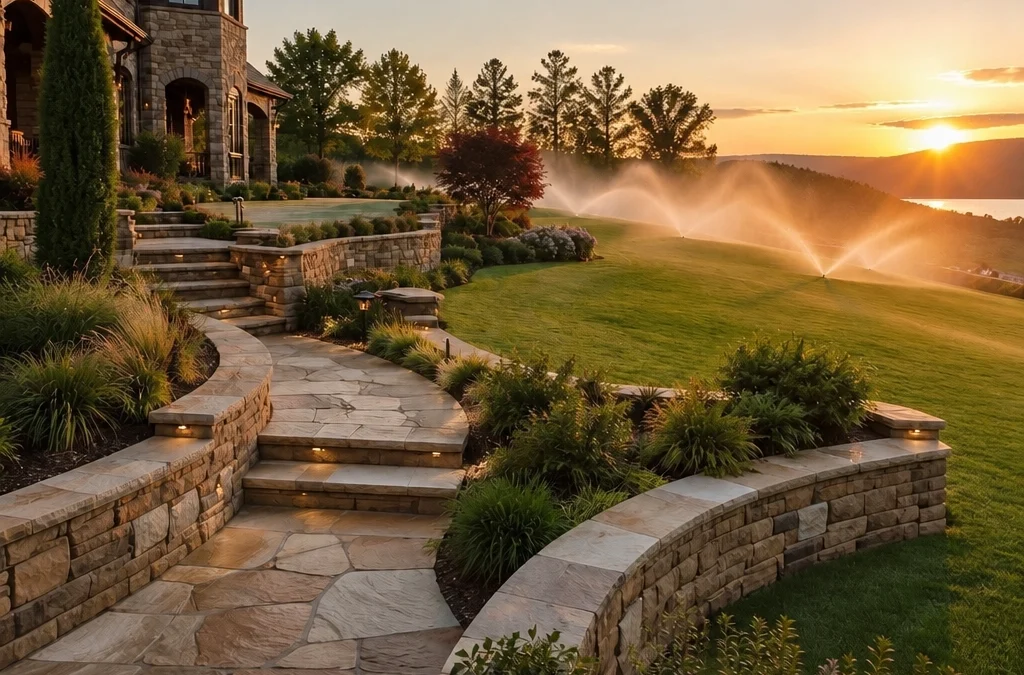
The strongest Arkansas landscapes are designed around the ground beneath them. Clay soil, changing slopes, water movement, and seasonal freeze-thaw conditions all influence how stonework and planting should be planned. When these elements are considered together from the outset, custom landscape design can make a property more functional while bringing lasting beauty and a sense of calm to the outdoors.
At Architectural Landscape Construction LLC, landscape design and stone masonry are planned as connected parts of one environment. Our team includes two of Arkansas’s few true stone masons, master artisans who bring traditional craftsmanship and thoughtful design together. The result is not simply a wall or pathway, but a cohesive landscape shaped for its site.
Begin With the Soil, Slope, and Water
Arkansas clay varies by location and property. In many areas, fine-textured soils hold moisture and allow water to move through them slowly. The exact conditions can differ across a single site, so it is better to assess the property than assume every yard behaves the same way. The USDA’s Web Soil Survey is a useful starting point for understanding mapped soil conditions; it does not replace on-site assessment.
For landscape construction in Arkansas, this context matters wherever a design includes a retaining wall, patio, steps, or planted terrace. Water that collects above or behind a structure can affect the surrounding soil and add pressure to a wall. A plan should therefore consider where roof runoff, irrigation, and surface water travel, and where that water can be directed responsibly.
Slope adds another layer. A hillside may need carefully placed retaining elements and steps to make it more usable, while a gentler grade may be better served by a path, planted transition, or simple adjustment to the finished contours. The goal is to shape a landscape that feels natural while accounting for how water flows across it.

Retaining Walls Are Part of a Larger Plan
Retaining walls in Arkansas should be considered as one part of the overall site design, not as isolated stone features. Their location and form affect circulation, planting areas, usable outdoor space, and water management. A wall may help define a level area or support a change in grade, but its design needs to respond to the actual slope and site conditions.
Planning should account for what lies above and below the wall, how water will move through the landscape, and how the wall connects to paths, steps, patios, and planting beds. Drainage details are site-specific. A qualified landscape construction professional can help assess the right approach and identify when additional technical review may be appropriate.
Stone brings a distinct architectural character to retaining structures. Its natural variation can soften a grade change, complement a home’s exterior, and give a landscape a feeling of permanence. Skilled masonry also makes it possible to coordinate walls with steps, caps, landings, and walkways so the elements read as a unified composition.
Freeze-Thaw Conditions Belong in the Design Conversation
Arkansas experiences periods of freezing and thawing during winter. When water is present in soil or around masonry, those cycles can affect the materials and surfaces over time. Moisture management is therefore important not only for how a landscape performs after a storm, but also for how it weathers season after season.
That does not mean every property needs the same construction detail. Stone selection, the design of the structure, site exposure, and the movement of water all matter. The appropriate solution depends on the project. A careful design considers those conditions early, rather than treating drainage or winter exposure as an afterthought.

Hardscape Design and Planting Should Work Together
Hardscape design in Arkansas is most successful when stone and planting feel intentionally connected. A wall can establish a clear edge for a garden bed, while the planting softens the stone and brings seasonal color and texture. A path can guide movement through the site and link the home to a patio, garden, or outdoor gathering space.
Plant selection and placement should reflect the site’s light, drainage, and soil conditions. Irrigation should also be planned with the hardscape in mind: water delivery needs to support the landscape without directing unnecessary moisture toward stonework. These decisions are easier to coordinate when the design considers plants, paths, structures, and water as a whole.
For inspiration, explore our landscape and stonework gallery. Every property has its own character, but the guiding principle remains consistent: create a composition that is both beautiful and appropriate to its setting.
Master Masonry Brings Precision to the Vision
Natural stone has individuality: its color, texture, shape, and variation are part of its appeal. Working with it well calls for judgment and patience. The proportions of a wall, the rhythm of a path, and the transitions between levels all influence how a finished landscape feels.
Architectural Landscape Construction LLC brings this artistry to custom landscape design services in Arkansas. With two of the state’s few true stone masons, we unite design thinking with hands-on stone craftsmanship. We offer design and scale drawings, and our landscaping services include stone masonry, retaining walls, French drains, and other elements that can be coordinated as part of a broader outdoor plan.
For homeowners who want to learn more about wall planning, our Retaining Wall Bible is available in the ALC Heritage Collection. It is an educational resource, not a substitute for a site-specific design or professional evaluation.

A Practical Checklist for Planning
Before committing to a layout, consider:
- Where water flows: Note roof runoff, low spots, and places that remain wet after rain.
- How the grade changes: Identify where slopes affect access, usable space, or the position of a wall.
- What the landscape needs to do: Decide how you want to move through the yard and use its outdoor spaces.
- How stone and planting will connect: Plan transitions among walls, steps, paths, patios, and garden beds.
- What needs further evaluation: Have site conditions and structural needs assessed when a project calls for it.
A considered plan helps align the visual ambition with the practical needs of the property. It also gives the design and construction team a shared understanding of how each element contributes to the finished landscape.
Frequently Asked Questions
Does Arkansas clay affect retaining wall planning?
It can. Clay may hold moisture and allow water to drain slowly, so the soil, slope, and water movement around a proposed wall should be considered during site planning. Conditions vary, and the appropriate design depends on the property.
Why does drainage matter behind a stone wall?
Water collecting behind a wall can add pressure to the retained soil and affect the surrounding structure. Drainage should be planned for the specific site, with the direction and destination of runoff considered as part of the full landscape design.
Should freeze-thaw cycles influence stone selection?
Yes. Local winter exposure and moisture conditions are worth discussing when choosing stone and planning masonry. The right material and construction approach depend on the design and site conditions.
Can landscape design and stone masonry be planned together?
Yes. Planning them together allows retaining walls, steps, patios, paths, planting, and water management to work as a coordinated landscape rather than separate additions.
How do I begin planning a landscape project in Arkansas?
Start by identifying your goals, noting how the property handles water, and considering how you want to use the outdoor space. Then arrange a consultation to discuss the site, design possibilities, and whether additional evaluation is appropriate.
Let’s Plan With the Site in Mind
If you are considering a custom landscape in Arkansas, we invite you to contact our team to discuss your property and goals. Together, we can explore a design that respects the land, gives water thoughtful consideration, and brings stone craftsmanship into a lasting, harmonious outdoor setting.
Architectural Landscape Construction: Legacies in stone since 1987.
Recent Comments