
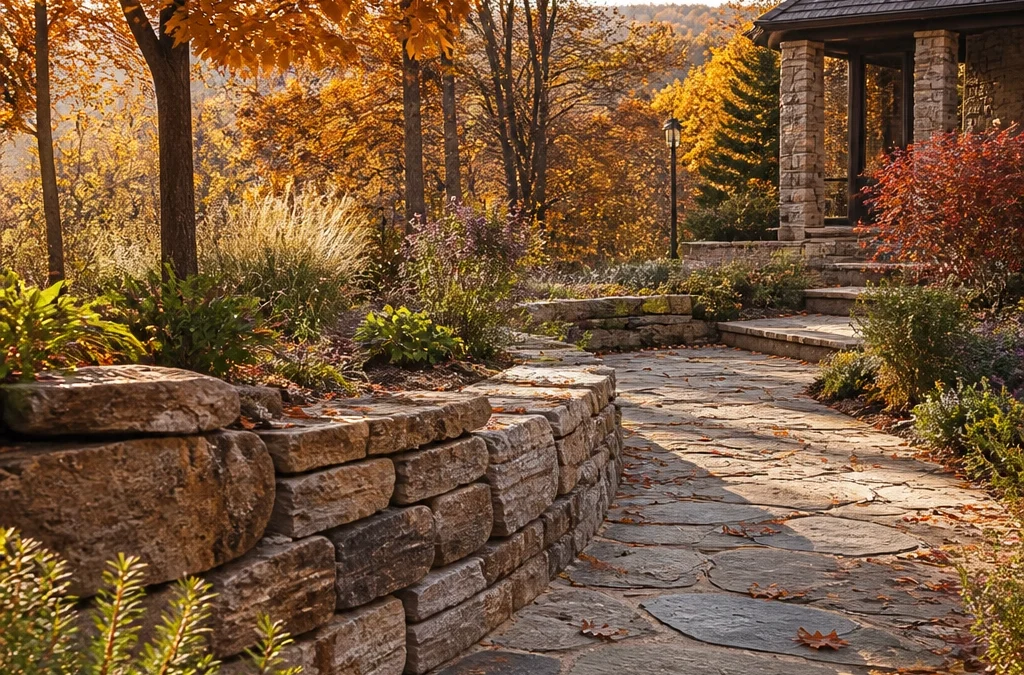
The most reliable way to winterize an Arkansas stone landscape is to work in this order: move water away from the stone, inspect and repair vulnerable areas, protect natural stone and jointing with breathable methods, shut down the irrigation and water-feature systems that touch the masonry, and then adopt winter maintenance habits that prevent impact, salt, snow, and frozen-clay damage. Begin during the pre-freeze window, often mid-to-late October in Northwest Arkansas and somewhat later in Central Arkansas, because repeated freeze-thaw cycles can turn a small fall issue into a larger spring repair.
Arkansas landscapes face a demanding combination of conditions. Expansive clay soil swells when wet and contracts as it dries. The state receives roughly 50 inches of annual rainfall, and Northwest Arkansas properties often add steep hillside grades to the equation. When water remains beside a wall footing, beneath a patio base, or inside an open joint, freezing temperatures can create movement where carefully placed stone should remain stable.
1. Get Water Away from the Stone
Drainage is the first responsibility of winter preparation. Before inspecting cosmetics or applying any product, confirm that water has a clear path away from your retaining walls, patios, steps, pillars, and seat walls.
Walk the landscape during or after rainfall if possible. Look for water collecting at the base of a wall, flowing toward a patio, or standing in planting beds beside the house. Clear leaves and sediment from:
- French drain inlets and outlets
- Retaining-wall drainage paths
- Weeping holes
- Surface drains and channel drains
- Gutters and downspout extensions
- Swales and low points around patios
Downspouts should discharge far enough away that roof water does not saturate the soil behind a wall or undermine a patio edge. If a bed has settled toward the masonry, careful re-grading may be necessary to restore positive drainage. On a Northwest Arkansas hillside, even a modest change in grade can direct concentrated runoff toward a wall.
The objective is not simply to make water disappear. It is to prevent water from sitting against wall footings, entering joints, or saturating the base beneath a hardscape surface through winter.
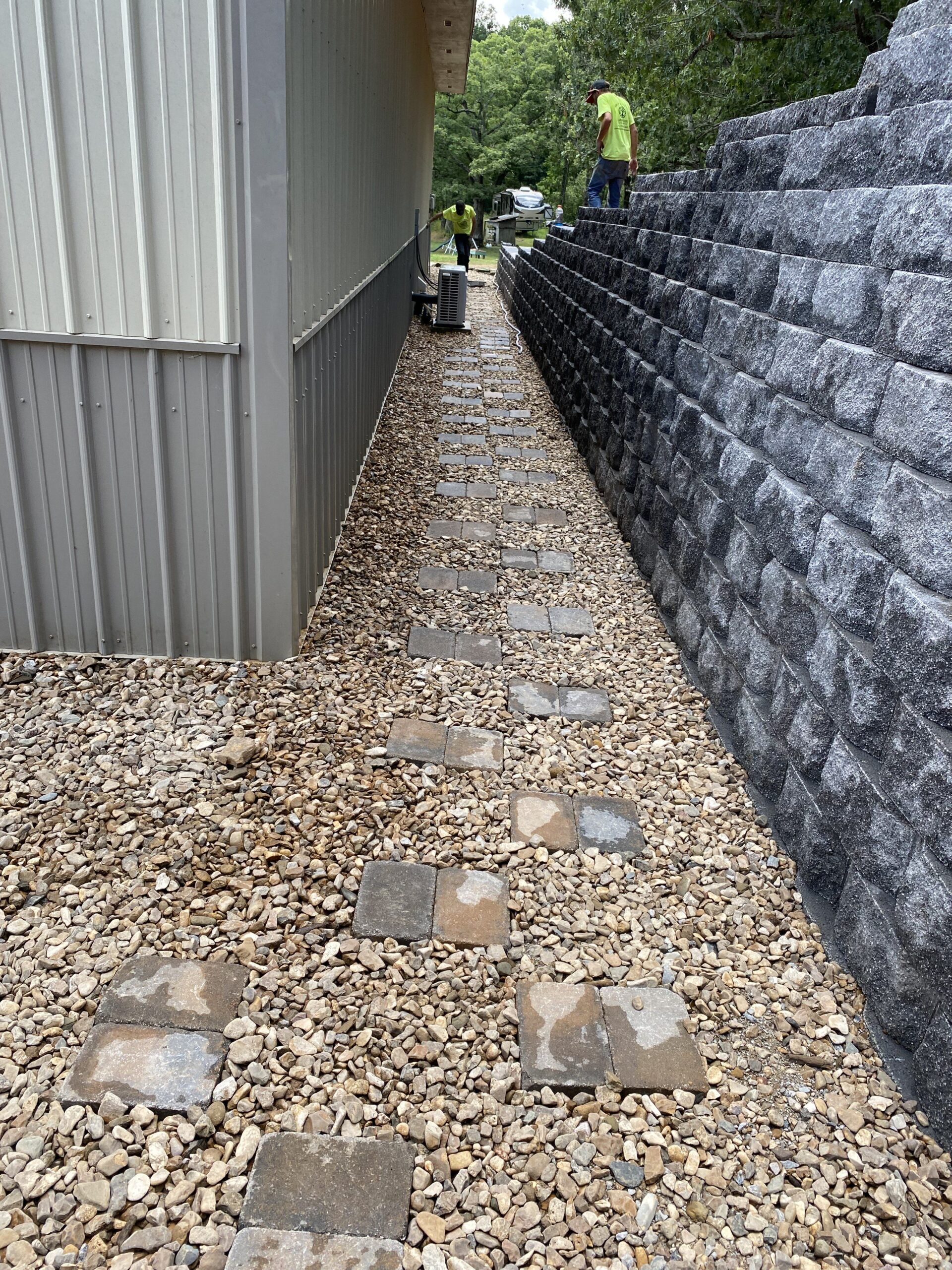
2. Inspect and Repair Before Freeze-Thaw Begins
Once drainage is functioning, inspect the stonework with a careful, patient eye. Walk every retaining wall, seat wall, step, pillar, patio, and path. Winter is not usually the season that creates every problem; it is the season that exposes weaknesses already present.
Look for settled or rocking caps, open mortar joints, chipped edges, loose flagstone, displaced pavers, and vegetation growing through joints. Pay particular attention to areas where soil has washed out, where a step meets a wall, and where a patio transitions to a planting bed.
A small opening in a joint may allow water to enter and freeze. A rocking flagstone may widen its bedding failure with every temperature swing. A settled cap can redirect runoff into the wall instead of away from it. These are the moments when a mason’s eye matters. The correct repair depends on whether the structure is dry-set, sand-set, mortared, mechanically restrained, or supported by a deeper engineered base.
Fall repairs are an act of stewardship, not alarm. Clearing a drainage outlet, resetting a loose stone, or addressing a failing joint is generally more controlled than waiting until spring to evaluate a wall that has shifted. If the condition involves movement, bulging, cracking, or persistent water pressure, consult an experienced professional before attempting a surface-only repair.
3. Protect Stone and Jointing Correctly
Natural stone is durable, but durable does not mean every stone should be sealed or treated identically. The right winter protection respects the material’s breathability.
Do not seal a wet wall, damp patio, or newly built masonry feature simply because freezing weather is approaching. A sealer applied before the stone and jointing have properly dried can trap moisture. That moisture may contribute to efflorescence, discoloration, surface deterioration, or freeze-thaw stress.
Natural stone and mortar also behave differently. Many natural stone surfaces benefit from a compatible penetrating treatment when the stone type, exposure, and product specifications support it. Mortar joints, however, must be able to release vapor. A film-forming coating can interfere with that movement and may create a false sense of protection.
Before using any sealer, identify the stone, check the manufacturer’s instructions, and confirm that the product is suitable for exterior freeze-thaw exposure. Test it in an inconspicuous area first. If the surface is new, recently washed, or visibly damp, waiting is often wiser than rushing.
Sand-set flagstone requires a different kind of preparation. Sweep compatible joint sand into open areas and top up low joints before winter. Do not use an incompatible material simply because it is readily available. The jointing should stabilize the stones while allowing the assembly to move appropriately with seasonal conditions.
For detailed winterization guidance, homeowners can review our Winter Prep Masterclass and winterization guide, then arrange a professional evaluation when the condition of the masonry is uncertain.
4. Winterize the Systems That Touch the Stone
Stone landscapes often depend on systems hidden beneath or integrated into the finished design. Winter preparation should include every water, electrical, and mechanical component that can affect the masonry.
For irrigation, shut down the controller, close the appropriate water supply, and drain or blow out the lines according to the system design. Protect the backflow preventer and exposed valves using the manufacturer’s recommended procedure. Do not assume that turning off the timer removes all freeze risk. Water trapped in exposed components can still create damage.
Our irrigation and landscape construction services include systems such as sprinkler installations and French drains. You can also review our irrigation shutdown winterization guidance as a companion resource before the first hard freeze.
Water features require their own inspection. Determine whether the pump should be removed, drained, or operated through winter. Clean the skimmer, protect the liner from damaging debris, and inspect waterfall channels for leaves and sediment that can redirect water toward stonework. Pondless waterfalls deserve particular attention: check the reservoir, pump vault, access panels, and drainage around the basin.
Finally, inspect low-voltage lighting transformers, connections, junctions, and cable runs near patios and walls. Water infiltration around a connection can create electrical problems and may also saturate the soil beside masonry. A well-integrated lighting system should remain both beautiful and protected through the dormant season.

5. Adopt Winter Habits That Preserve Longevity
Winter maintenance determines whether your preparation continues to work. Avoid rock salt and aggressive de-icing products around natural stone, mortar, planted beds, and retaining walls. These materials can attack masonry and jointing, stain surfaces, and harm nearby vegetation. Use a stone-compatible alternative only when appropriate, and consider traction materials that will not chemically damage the installation.
When removing snow or ice, choose plastic or rubber-edged tools instead of steel blades. Metal can scratch, chip, or scar stone edges. Never stack heavy snow against a retaining wall, seat wall, pillar, or stair structure; concentrated weight and prolonged moisture can place unnecessary pressure on the masonry.
Refresh mulch around trees, shrubs, and planting pockets without covering drainage outlets or burying the face of a wall. Protect vulnerable plants with suitable coverings during severe cold, while keeping materials from trapping moisture against stone.
Be cautious with traffic on frozen clay. Foot traffic, equipment, carts, and vehicles can compact or heave saturated ground, especially along narrow side yards and hillside paths. Avoid driving or repeatedly walking over areas that are soft beneath a frozen surface.
Good design and good maintenance work together. A protected landscape returns to spring with its drainage pathways clear, its stonework stable, its systems ready for inspection, and its planting beds prepared for renewal.
Protect the Investment with a Professional Eye
A stone landscape is more than a collection of materials. It is a long-term architectural element that shapes how your property feels, moves, and welcomes people through every season. The cost of neglect is rarely just cosmetic: a blocked outlet or open joint can place additional stress on a larger assembly. Addressing those concerns in fall is a measured form of stewardship.
Architectural Landscape Construction LLC brings traditional craftsmanship and innovative design to landscape construction in Arkansas. We are home to two of Arkansas’s few true master stone masons, and we approach retaining walls, patios, steps, water features, and outdoor living spaces as enduring works of artistry.
To see examples of our work, visit the Architectural Landscape Construction gallery. For deeper planning resources, visit the Legacy Hub shop.
If you would like a professional opinion before the first freeze, we invite you to contact us for a thoughtful consultation. Together, we can protect the structure, beauty, and tranquility of your Arkansas landscape for the seasons ahead.
Frequently Asked Questions
When should I winterize my Arkansas stone landscape?
Begin in the pre-freeze window, commonly mid-to-late October in Northwest Arkansas and later in Central Arkansas. Weather varies by year and elevation, so schedule drainage inspections, repairs, and irrigation shutdowns before forecast temperatures remain near or below freezing.
Why is drainage so important for Arkansas retaining walls?
Arkansas clay soil can expand when wet and contract as it dries. When water remains behind or beneath stone and then freezes, the resulting movement can stress wall footings, joints, patio bases, and steps. Proper drainage reduces that exposure.
Should I seal my natural stone before winter?
Not automatically. The stone must be clean and fully dry, and the product must be compatible with the particular stone and jointing system. Avoid sealing newly built or damp masonry because a non-breathable product may trap moisture and contribute to efflorescence or deterioration.
What should I use to remove snow from a stone patio?
Use a plastic shovel or a tool with a rubber edge. Avoid steel blades that can scratch or chip the stone. Also avoid stacking snow against walls, pillars, steps, and other masonry features.
Can Architectural Landscape Construction inspect my retaining wall before winter?
Yes. We welcome consultations for retaining walls, patios, steps, drainage, water features, and other stone landscape elements. An early evaluation can identify conditions that deserve attention before freeze-thaw cycles begin.
Architectural Landscape Construction: Legacies in stone since 1987.
Recent Comments