
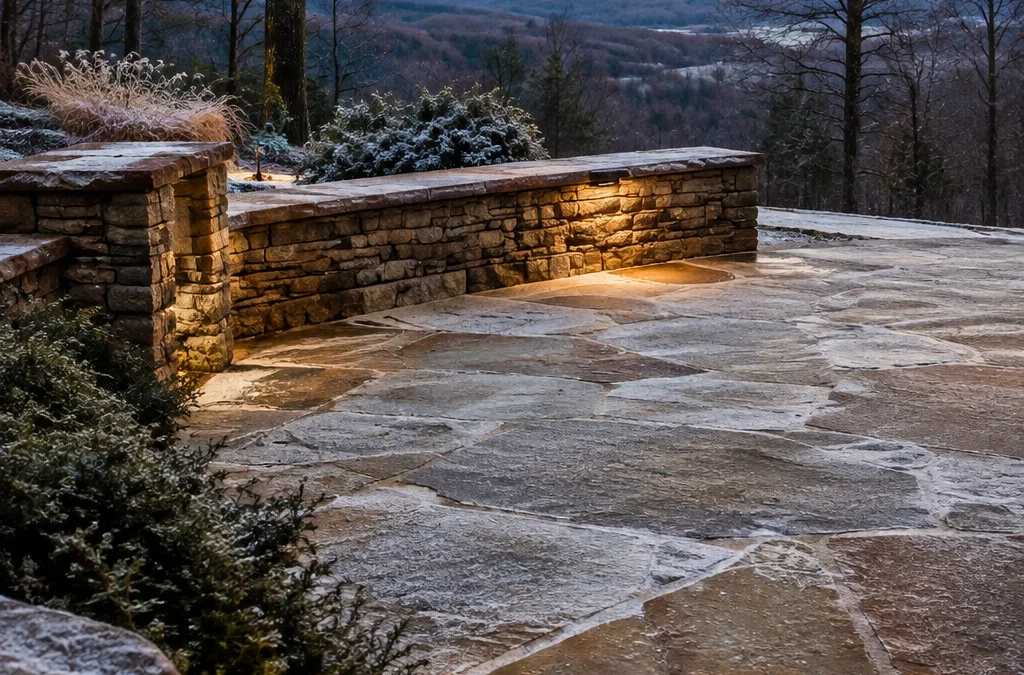
Fall and early winter are among the best times to plan and book an Arkansas stone project for spring. Starting between October and January gives you time to secure a place in a master mason’s schedule, develop a considered design, assess the site, confirm local requirements, and plan around Arkansas clay and freeze-thaw conditions. When the weather allows construction to begin, the important decisions can already be in place.
A custom patio, garden path, outdoor kitchen, or retaining wall is more than a material choice. It is a carefully integrated landscape project. Thoughtful preparation now helps bring your vision into focus before spring demand and schedules gather momentum.
Spring Schedules Begin Taking Shape in Fall
Homeowners often start looking for a contractor when the first warm days arrive. By then, many experienced stone masons are already committed to projects planned months earlier. Stonework depends on skilled labor, deliberate layout, material coordination, and construction sequencing; it cannot always be added to a calendar at short notice.
Architectural Landscape Construction has two of Arkansas’s few true stone masons. These master artisans bring traditional craftsmanship together with innovative design, shaping natural stone into elegant, enduring outdoor spaces. Planning early gives you time to discuss the vision, refine the scope, and ask about scheduling before the spring calendar fills.

Design and Approvals Need More Time Than You Might Expect
A complete design must do more than look beautiful on paper. It should account for access, elevations, how you intend to use the space, material selections, drainage, and how new stonework will connect with existing features. Projects involving retaining walls, steps, outdoor kitchens, lighting, or substantial changes in grade may need added coordination.
Permits and reviews can also affect timing. Requirements vary by location and project scope, so it is wise to check with the relevant city or county before construction. If a project needs drawings, engineering input, utility coordination, or separate approvals, those steps can extend the planning phase.
Beginning in fall leaves room to address these details without making rushed decisions. Explore our landscaping and stone masonry services to see the types of work we can plan with you.
The Dormant Season Offers a Clearer View of the Site
When plants lose their leaves and growth slows, the structure of a property can become easier to read. Slopes, low areas, existing stonework, access routes, and relationships between the house and yard may be more visible. A site walkthrough during this period can help you identify how you want to move through the landscape and where a new feature could sit naturally.
Arkansas clay deserves special attention. Clay-heavy soils can hold water and may become difficult to work when wet; working or compacting saturated soil can compromise its structure. A site assessment can help identify where water tends to travel or collect and what questions need further investigation before the design is finalized. Soil testing may also inform planting and amendment decisions. The University of Arkansas Division of Agriculture Cooperative Extension offers guidance on soil preparation and amendments.
The dormant season is useful for observation, not a reason to assume that every site is ready for excavation. Soil condition changes with weather. Construction should be scheduled for suitable conditions rather than forced into wet, saturated, or frozen ground.
Plan for Freeze-Thaw Conditions Before Spring Construction
Arkansas weather varies across the state, and cold-season conditions are not identical in the Ozarks, central Arkansas, and the southern part of the state. Freeze dates are climate averages, not guarantees. The National Weather Service’s Arkansas frost and freeze information is a useful reference, but project timing should account for the local forecast and site conditions.
Water management belongs in the design from the beginning. In clay soils, drainage, surface flow, and the way a site handles rain can influence how stonework is planned. Freeze-thaw cycles make it especially important to consider how moisture will move around and through a proposed feature. Retaining walls, paths, steps, and patios each need a design suited to their intended use and site.
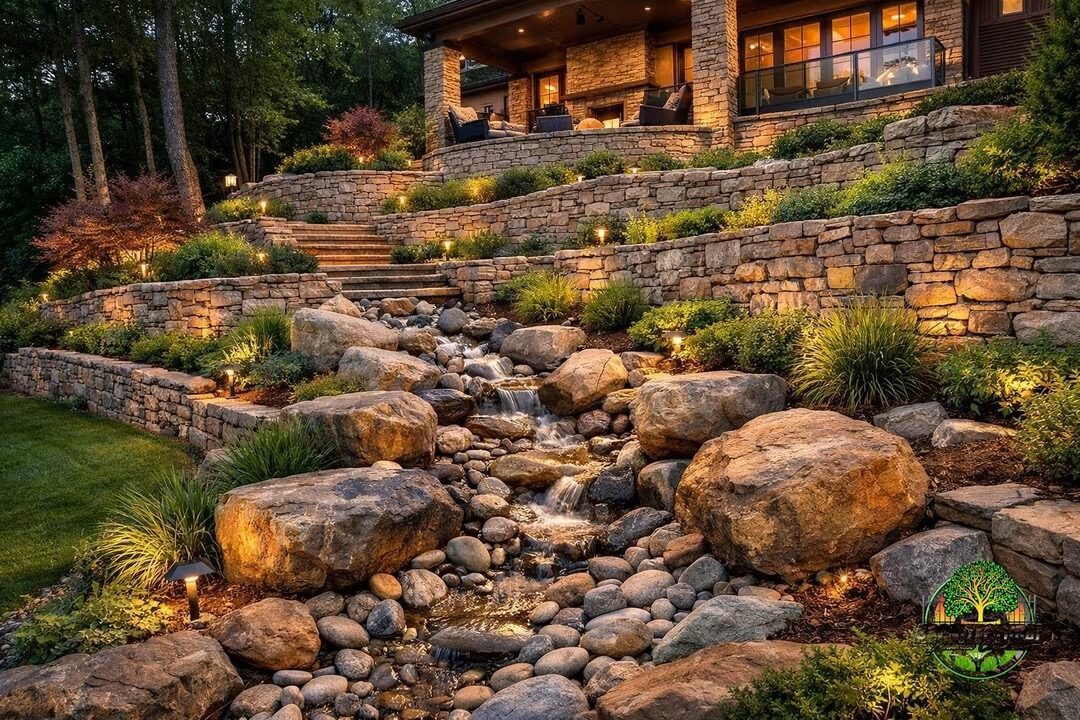
The goal is not to build on a fixed calendar date regardless of weather. A spring construction plan should include flexibility for changing ground and temperature conditions, with work proceeding when the site and materials are appropriate. That preparation helps keep artistry and longevity at the center of the build.
Budgeting and Phasing Start With a Clear Scope
A useful budget begins with a clear understanding of what you want to create. Decide which features are essential, which would be welcome additions, and how the finished space should function. A patio, steps, drainage improvements, and retaining elements can work best when designed together, even if you choose to build them in phases.
For larger-ticket projects, our pricing follows a yearly-only structure; we do not publish fixed online prices. Project scope, materials, site access, and construction requirements all matter, so a conversation and site assessment are the appropriate starting points. If phasing is a good fit, the plan should identify how each stage connects to the next, helping preserve the overall design rather than creating disconnected improvements.
Browse the project gallery for ideas on stonework and outdoor spaces, then consider which details feel right for your property.
What to Do Now: A Homeowner Checklist
A little preparation makes the first design conversation more productive. Before spring, you can:
- Walk the site and take photos. Capture the areas you want to improve from several angles, including how they connect to the house.
- Write a wish list. Note the features you want, how you plan to use them, and which priorities matter most.
- Observe water after rain. Record where it flows, where it lingers, and whether you notice erosion or unusually soggy areas. These are useful observations, not a substitute for professional assessment.
- Think about access. Note gates, narrow passages, slopes, and other constraints that could affect construction planning.
- Consider the seasonal view. Notice how sunlight, shade, and surrounding vegetation change as leaves fall.
- Gather inspiration. Save images, material preferences, and examples of outdoor living spaces that reflect the atmosphere you want.
- Ask early about timing. Contact a design-and-build team while there is room to discuss the project and map the next steps.
If you are ready to talk through your plans, we welcome you to contact our team. We can begin with your priorities, the property, and a shared vision for its future.
Frequently Asked Questions
Is fall too late to start planning a spring stone project?
No. Fall is a practical time to begin. Early planning allows time for site review, design decisions, material discussions, scheduling, and any local approvals that may apply.
Can stone masonry construction happen during winter in Arkansas?
It depends on site and weather conditions, as well as the construction methods and materials involved. Frozen or saturated ground and unsuitable temperatures can affect some work. A project should be scheduled around appropriate conditions, not a guaranteed winter start date.
Why assess a landscape when plants are dormant?
With less foliage, slopes, access routes, and parts of the property’s underlying structure may be easier to see. A winter walkthrough can also help homeowners observe how the yard responds to rain, though a professional assessment may be needed to evaluate specific site conditions.
Does Arkansas clay affect stone and landscape design?
It can. Clay-heavy soil may hold water and become difficult to work when wet. Soil condition and drainage should be considered when planning stone features, planting areas, and construction timing.
What should I prepare before contacting a landscape designer?
Bring a short wish list, photos, inspiration, and notes about how you use, or hope to use, the space. Observations about water flow and access are also helpful starting points for a site conversation.
Begin the Conversation Before Spring
Planning in fall and early winter gives you the opportunity to make considered decisions before the busiest season arrives. With thoughtful design, site-aware preparation, and the hands of master artisans, a stone project can become a lasting part of the landscape: welcoming, functional, and beautiful through the seasons.
We invite you to begin with a conversation about what you envision for your Arkansas property.
Architectural Landscape Construction: Legacies in stone since 1987.
Recent Comments