
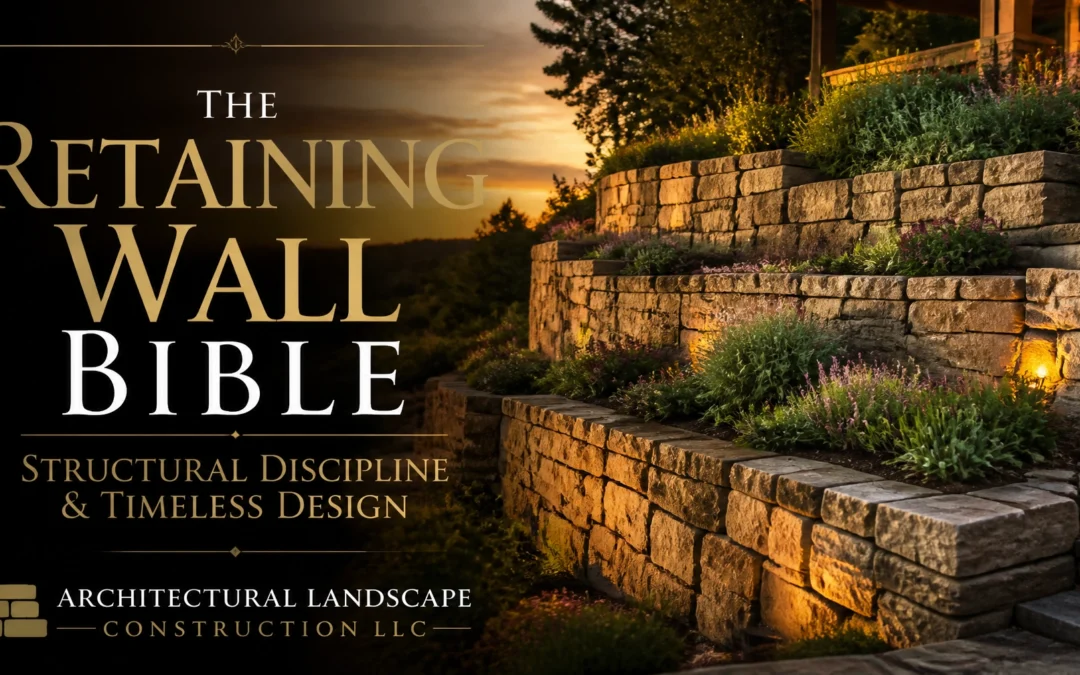
For homeowners seeking stone masonry contractors in Arkansas, the distinction between a general contractor and a true master mason is found in the details that determine both performance and beauty: precision stone cutting, a structural understanding of retaining walls, disciplined drainage planning, and the patient artistry of hand-set stone. At Architectural Landscape Construction LLC, two of Arkansas's few true master stone masons bring this rare combination of technical judgment and traditional craftsmanship to every landscape construction project.
True Master Masonry Begins with How Stone Is Read
Natural stone is not a uniform manufactured product. Each piece has its own grain, bed, face, weight, density, and natural point of strength. A master mason understands how those qualities affect the way stone should be cut, placed, supported, and joined.
This knowledge cannot be reduced to applying veneer or arranging pre-cut blocks according to a standard pattern. It is developed through years of working directly with stone and learning how individual pieces respond to a chisel, a splitter, or a precise mallet strike.

For your project, that expertise creates more than a pleasing surface. It produces masonry with visual rhythm and structural logic. Bed joints align with intention. Caps sit firmly and shed water. Corners feel grounded rather than assembled. Steps meet the grade with confidence. The finished wall appears to belong to the property: not as an afterthought, but as an enduring architectural element.
Precision Cutting Creates Architectural Beauty
Precision cutting is one of the clearest differences between ordinary stone installation and master-level masonry. The goal is not to make every stone identical. The goal is to shape each stone so that its natural character contributes to the whole composition.
Our masons consider:
- The direction of the stone’s natural bedding
- The relationship between face stones and structural backing
- Joint width and continuity
- The visual balance of large and small pieces
- The transition between walls, steps, patios, caps, and planting areas
- How light will move across the surface throughout the day
A well-cut stone can create a crisp contemporary line, a restrained traditional coursing pattern, or a more organic dry-stack appearance. These decisions are part of the design language of your property.
This is where custom landscape design services in Arkansas become especially valuable. A masonry feature should not be designed in isolation. Its proportions, material palette, and placement should respond to the architecture of the home, the existing topography, the movement of water, and the way you intend to use the space.
Arkansas Soil and Climate Demand Structural Discipline
Arkansas landscapes experience a demanding combination of conditions. Many sites contain clay-heavy or expansive soils that shrink as they dry and swell as they absorb moisture. The Arkansas Geological Survey explains that expansive clays change volume according to their moisture content, which can place stress on foundations, paving, and retaining structures.
Arkansas also receives substantial rainfall, often in intense seasonal events. Winters bring periods of freezing temperatures and recurring freeze-thaw movement, particularly across northern and central areas of the state. When water becomes trapped behind a wall, the combination of saturated clay, hydrostatic pressure, and freezing conditions can contribute to shifting, cracking, leaning, or premature deterioration.
For that reason, retaining walls Arkansas homeowners commission should be designed as complete systems: not simply as attractive stone faces.
A sound approach begins with a site assessment and continues through:
- Excavation to competent, properly prepared soil
- A stable, compacted base appropriate to the wall system
- Correct wall batter, embedment, and load distribution
- Free-draining aggregate behind the wall
- A perforated drain pipe with a deliberate outlet
- Geotextile separation where clay could migrate into drainage stone
- Surface grading that directs water away from the wall
- Weep holes or other pressure-relief details where appropriate
The exact design depends on wall height, soil conditions, slope, nearby structures, and the loads above the wall. Walls supporting driveways, buildings, pools, steep slopes, or other significant loads may require review by a licensed engineer. A responsible masonry contractor should recognize when engineering is necessary rather than treating every wall as a simple landscape feature.
Drainage Is Part of the Masonry, Not an Add-On
Drainage is often invisible once construction is complete, yet it is one of the most important elements of a successful retaining wall. Clay soil holds water and drains slowly. If native clay is placed directly against the back of a wall, water can accumulate and create pressure that the visible stonework was never intended to withstand.
Master-level construction separates the wall from that pressure. Clean, open-graded aggregate allows water to move downward toward a properly placed drain line. Filter fabric can help prevent fine clay particles from migrating into and clogging the drainage zone. The area above the wall should also be graded so surface runoff does not pour directly into the backfill.
This is the practical side of hardscape design Arkansas: the beauty you see depends on decisions made below grade. A graceful curve, a broad stone cap, or a carefully framed planting bed will endure only when the base, drainage, and surrounding soil are treated with equal precision.

Hand-Set Stone Brings Enduring Artistry to the Landscape
Machine-made materials can provide consistency, but natural stone offers something deeper: variation, age, texture, and a direct connection to the land. Hand-set masonry preserves those qualities while giving them architectural order.
A master mason does not force every stone into a rigid pattern. Instead, the mason composes the wall so that irregularity feels intentional. The result can be formal and refined, rustic and grounded, or quietly transitional between the home and the natural landscape.
That artistry has a lasting effect on how a property feels. A stone retaining wall can define a garden room, stabilize a slope, frame a terrace, or guide movement through the landscape. A flagstone path can turn a necessary route into a moment of arrival. A stone seat wall can make an outdoor room feel permanent and welcoming.
The objective is not decoration for its own sake. It is to create an outdoor environment with proportion, tranquility, and enduring value.
The Process Connects Landscape Design to Construction
The strongest landscape construction Arkansas homeowners invest in begins with a unified vision. Before stone is selected, we consider the property’s grades, views, drainage patterns, circulation, planting opportunities, and architectural character.
That integrated process may include:
- Understanding the site: We study slopes, existing water movement, soil conditions, access, and the relationship between the home and outdoor spaces.
- Defining the purpose: A wall may need to retain soil, create usable space, guide circulation, provide seating, or establish a visual anchor.
- Selecting the masonry system: Dry-stack, mortared stone, natural stone veneer over a structural wall, or another system may be appropriate depending on the site.
- Resolving the hidden structure: Base preparation, drainage, reinforcement, and engineering requirements are addressed before visible construction begins.
- Hand-setting and refining the stone: Each piece is selected and placed for stability, proportion, and visual harmony.
- Integrating the landscape: Plantings, lighting, paths, patios, water features, and outdoor living areas complete the composition.
You can explore examples of the visual language we pursue in our gallery, where stone, planting, circulation, and architecture come together as one landscape.
What to Ask Stone Masonry Contractors in Arkansas
Before selecting a contractor, ask questions that reveal how the project will perform: not only how it will look on completion day.
- How do you address clay soil and seasonal movement on this site?
- What drainage system will be installed behind the retaining wall?
- Where will the drain outlet discharge?
- What stone is appropriate for Arkansas’s exterior freeze-thaw conditions?
- How will the wall base, batter, and footing be designed?
- When is engineering required for the proposed wall?
- Who will perform the visible stone cutting and hand-setting?
- Can you explain how the wall will connect to the broader landscape design?
The answers should be specific and understandable. A professional partner will welcome these questions because long-term performance is inseparable from good craftsmanship.
A Legacy Built Through Precision and Patience
Serving Arkansas since 1987, Architectural Landscape Construction LLC combines traditional stone masonry with innovative landscape design. Our work is guided by a simple belief: an outdoor space should be beautiful today, structurally sound through Arkansas weather, and worthy of being enjoyed for generations.
For homeowners planning a significant retaining wall, stone terrace, pathway, outdoor room, or complete landscape transformation, we invite you to begin with a thoughtful consultation. Visit our services page, review the gallery, or explore the resources available through our Legacy Hub shop.
When the project calls for rare technical judgment and genuine reverence for the material, two of Arkansas's few true master stone masons bring something exceptional to the work: precision you can trust, artistry you can feel, and stonework designed to endure.
Architectural Landscape Construction: Legacies in stone since 1987.
Frequently Asked Questions
What makes a true master mason different from a general contractor?
A true master mason understands how to read, cut, place, and support natural stone as both a structural material and an artistic medium. This includes knowledge of stone bedding, joint composition, wall geometry, drainage, and long-term performance.
Why is drainage important behind retaining walls in Arkansas?
Arkansas clay soils can retain water and may expand or contract as moisture levels change. Without adequate drainage, water can create hydrostatic pressure behind a wall. Proper aggregate, drain piping, fabric, grading, and pressure-relief details help protect the wall through heavy rain and freeze-thaw cycles.
Are Arkansas clay soils a concern for stone masonry?
They can be. Expansive clay may shrink when dry and swell when wet, creating movement that affects walls, paving, and foundations. Site-specific preparation and drainage are essential, especially for larger walls or sloped properties.
When does a retaining wall require engineering?
Engineering should be considered for taller walls, walls supporting driveways or structures, walls near property improvements, and walls built on steep, saturated, or unstable slopes. Requirements vary by jurisdiction and site conditions, so a qualified professional should evaluate the project.
What stone is best for an Arkansas landscape?
The appropriate stone depends on the project’s structure, exposure, aesthetic, and site conditions. Dense, durable exterior stone with suitable freeze-thaw performance is generally preferred. A master mason can help select materials that support both longevity and the architectural character of your property.
Recent Comments